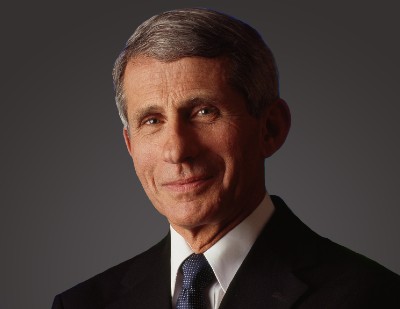
Anthony S. Fauci, M.D.
Distinguished University Professor
Georgetown University School of Medicine
McCourt School of Public Policy
Former Director of National Institute of Allergy and Infectious Diseases National Institutes of Health
Friday, March 6, 2026
2pm-3:30pm PST
Click on the YouTube link below to view this webinar. Once you have viewed the presentation, you can log back in and take the Quiz for this event. A score of 70% or above will earn you a Certificate for 2 hours of Medical Mentorship.
Workshop Description:
Join us for a rare conversation with Anthony S. Fauci, M.D., physician-scientist and longtime public health leader. Drawing on his decades at the NIH as Director of NIAID (1984–2022), his role advising seven U.S. presidents, and his current appointment at Georgetown University, Dr. Fauci will discuss what a life of service looks like in real time: choosing missions, leading teams, communicating science, and staying grounded when the stakes are national. Designed for community college, university, and post-bacc premed students, this session translates big impact into concrete preparation, including the habits, experiences, and character that training programs tend to value. Come hear directly from the source, not second-hand myths or advice from people who have no clue about the process. Bring your questions and get candid answers about building a meaningful path, from early coursework to research, clinical exposure, and public service opportunities. Leave with the next steps you can act on before this semester ends. Whether you dream of clinical practice, research, or policy, you will see how discipline and compassion can coexist in one career.
About the Speaker:
Anthony S. Fauci, M.D. has served as a Distinguished University Professor at Georgetown University School of Medicine and McCourt School of Public Policy since 2023. He also is a Distinguished Senior Scholar at the O’Neill Institute for National and Global Health Law at Georgetown. Previously, Dr. Fauci directed the National Institute of Allergy and Infectious Diseases at the National Institutes of Health from 1984 to 2022. In that role, Dr. Fauci was a key advisor to seven presidents on global HIV/AIDS issues, and on preparedness against emerging infectious disease threats. He also served as the Chief Medical Advisor to President Joe Biden. Dr. Fauci was one of the principal architects of the President’s Emergency Plan for AIDS Relief (PEPFAR), which has helped save more than 25 million lives throughout the developing world. As NIAID Director he oversaw an extensive research portfolio of basic and applied research to prevent, diagnose, and treat established infectious diseases such as HIV/AIDS, respiratory infections, diarrheal diseases, tuberculosis, and malaria as well as emerging diseases such as Ebola, Zika and COVID-19. He also led the NIAID research effort on transplantation and immune-related illnesses, including autoimmune disorders, asthma, and allergies.
Dr. Fauci advised seven Presidents on HIV/AIDS and many other domestic and global health issues. He also served as the Chief Medical Advisor to President Joe Biden. He was one of the principal architects of the President’s Emergency Plan for AIDS Relief (PEPFAR), a program that has saved more than 25 million lives throughout the developing world.
Dr. Fauci led numerous research initiatives to bolster medical and public health preparedness against emerging infectious disease threats such as pandemic influenza and COVID-19. As an HIV/AIDS researcher he joined the scientific effort soon after AIDS was first recognized in 1981 and conducted pivotal studies that underpin the current understanding of the disease and efforts to develop therapies and tools of prevention.
Dr. Fauci was the longtime chief of the NIAID Laboratory of Immunoregulation. He made many contributions to basic and clinical research on the pathogenesis and treatment of immune-mediated and infectious diseases. He helped pioneer the field of human immunoregulation by making important basic scientific observations that underpin the current understanding of the regulation of the human immune response. In addition, Dr. Fauci is widely recognized for delineating the precise ways that immunosuppressive agents modulate the human immune response. He developed effective therapies for formerly fatal inflammatory and immune-mediated diseases such as polyarteritis nodosa, granulomatosis with polyangiitis (formerly Wegener’s granulomatosis), and lymphomatoid granulomatosis.
Dr. Fauci made seminal contributions to the understanding of how HIV destroys the body’s defenses leading to its susceptibility to deadly infections. Further, he was instrumental in developing treatments that enable people with HIV to live long and active lives.
In a 2022 analysis of Google Scholar citations, Dr. Fauci ranked as the 44th most-cited living researcher. According to the Web of Science, Dr. Fauci ranked 9th out of 3.3 million authors in the field of immunology by total citation count between 1980 and April 2022. During the same period, he ranked 22th out of 3.3 million authors in the field of research & experimental medicine, and 715th out of 1.4 million authors in the field of general & internal medicine. Dr. Fauci’s h-index as calculated by Google Scholar is 239 as of May 2025.
Dr. Fauci has delivered major lectures all over the world and is the recipient of numerous prestigious awards, including the Presidential Medal of Freedom (the highest honor given to a civilian by the President of the United States), the National Medal of Science, the George M. Kober Medal of the Association of American Physicians, the Mary Woodard Lasker Award for Public Service, the Albany Medical Center Prize in Medicine and Biomedical Research, the Robert Koch Gold Medal, the Prince Mahidol Award, and the Canada Gairdner Global Health Award. He also has received 63 honorary doctoral degrees from universities in the United States and abroad.
Dr. Fauci is a member of the National Academy of Sciences, the National Academy of Medicine, the American Academy of Arts and Sciences, and the American Philosophical Society, as well as other professional societies including the American College of Physicians, the American Society for Clinical Investigation, the Association of American Physicians, the Infectious Diseases Society of America, the American Association of Immunologists, and the American Academy of Allergy, Asthma & Immunology. He serves on the editorial boards of many scientific journals and as an author, coauthor, or editor of more than 1,400 scientific publications, including several textbooks. Dr. Fauci also authored the autobiographical “On Call: A Doctor’s Journey in Public Service” which reached #1 on the New York Times Bestseller List in 2024. On Call also was chosen as one of the Best Books of 2024 by The New Yorker magazine; chosen as one of the Best Public Health Books of 2024 by Harvard Public Health; and chosen among the Best Books of 2024 by Scientific American.
View for Free:
What: A Life of a Public Servant: Dr. Anthony Fauci on Medicine and Public Service
When: Friday, March 6, 2026, 2 PM (Pacific Standard Time)
YouTube link:
Coming soon…